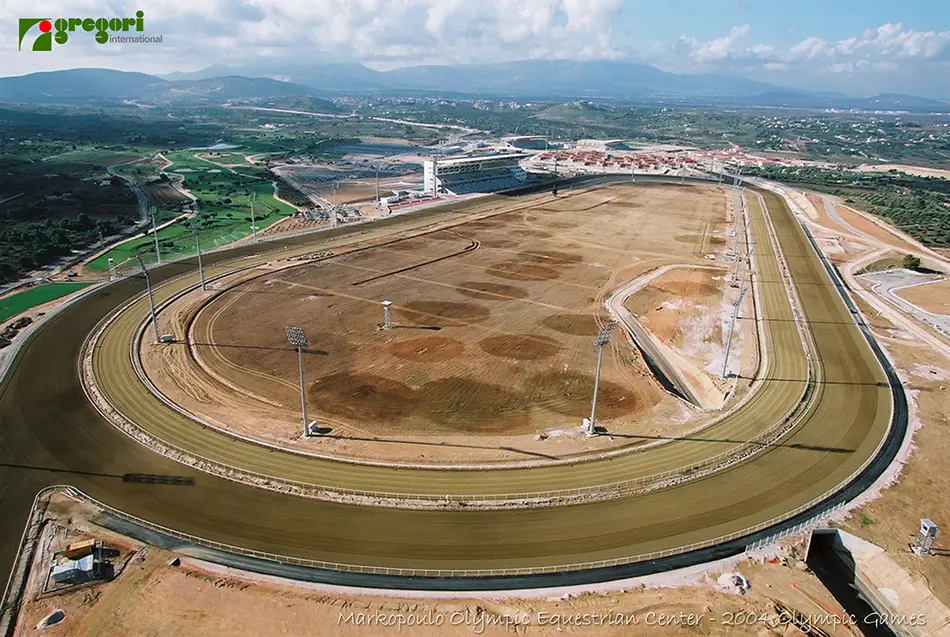
Athens Hippodrome (Markopoulo)
GR-I, Greece
Greece's principal thoroughbred racecourse in the Attica region, managed by ODIE (Greek Horse Racing Organisation) — home of the Greek Derby and the country's primary Classic racing programme since the late 20th century.
Track Facts
Track Length
8 furlongs
Primary Surface
Turf
Racing & Gaming
Season & Major Events
Major Events:
- Greek Derby
- Greek Oaks
- Greek 2000 Guineas
- Greek 1000 Guineas
- Athens Grand Prix
About Athens Hippodrome (Markopoulo)
The Athens Hippodrome at Markopoulo is the primary horse racing venue for Greece, operated under the licence of ODIE (Organismos Ippodromiou Ellados — the Greek Horse Racing Organisation), the state-affiliated body that regulates and promotes horse racing in Greece. The Markopoulo facility, situated approximately 30 kilometres south-east of central Athens in the Attica region, replaced the historic Faliro Hippodrome (which had operated closer to Athens since the early 20th century) and represents the modern era of Greek horse racing infrastructure. The track runs thoroughbred flat racing on a left-handed turf circuit, with meetings typically held on Wednesday evenings and Saturday afternoons during the flat season (March through November). Greece's racing programme is centred on the domestic Classic series — the Greek Derby (Ελληνικό Ντέρμπι), Greek Oaks, and Greek 2000 Guineas — which have been run continuously since the 20th century with the exception of interruptions during the Axis occupation (1941-1944). ODIE also operates the Pari Mutuel betting pools that represent the primary legal horse race wagering mechanism in Greece, with betting conducted both at the course and through a network of off-course betting shops in Athens and other Greek cities. Greek racing has faced significant challenges from the country's successive financial crises since 2010, but the core Classic programme has been maintained and efforts to attract quality international bloodstock have continued.