
Austria Horse Racing
Almost 200 years of racing history in Vienna's Prater park — Freudenau Racecourse and the Vienna Derby (since 1868) anchor Central Europe's imperial racing tradition, complemented by the modern Magna Racino all-weather facility.
Freudenau: Vienna's Imperial Racecourse
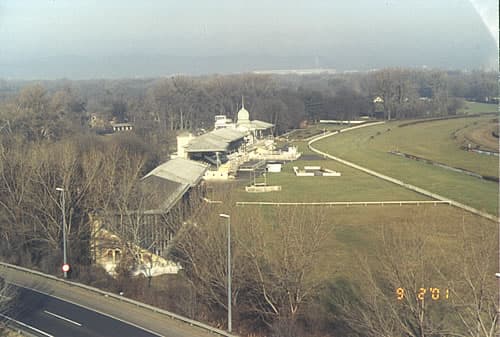
Freudenau in the Prater park — established 1839, Vienna Derby since 1868 — is Central Europe's oldest continuously operating flat venue. Set beside the Prater's famous chestnut avenue and historic Ferris Wheel, it carries nearly two centuries of Austrian racing history.
Magna Racino: Modern All-Weather Racing
Magna Racino at Ebreichsdorf south of Vienna — opened 2004 — combines an all-weather synthetic track with casino gaming, allowing year-round racing that attracts Central European entries through the winter months when Freudenau's turf is closed.
Top Sportsbooks for Austrian Racing
Bet on Grosser Preis von Wien & major Austrian meets
Austria Race Tracks
 AT-9
AT-9
Vienna's historic thoroughbred venue in the Prater park — the oldest continuously operating flat racecourse in Central Europe, home of the Vienna Derby since 1868.

3
Austria's modern thoroughbred and racino venue at Ebreichsdorf, south of Vienna — featuring an all-weather track and casino gaming alongside an international racing programme.
Austrian Horse Racing Overview
Austria's flat racing is administered by the Österreichischer Galopp-Verband (Austrian Gallop Association), with Freudenau handling the spring-summer turf programme (April–November) and Magna Racino providing all-weather racing through the winter. The Austrian Classic programme — Vienna Derby (June), Austrian Oaks, Austrian 2000 Guineas — provides the season's competitive framework.
Austria's Central European geographic position — bordering Germany, Czech Republic, Hungary, Slovakia, Switzerland, and Slovenia — makes it a natural hub for the Central European racing community. The Vienna Derby regularly attracts entries from all these countries, and Austrian horses compete at Group level in Germany and Czech Republic.
For international bettors, the Vienna Derby is accessible through Austrian bookmakers (Bet-at-Home, tipp3) and Betfair Exchange. The race's relative obscurity outside the DACH market creates pricing inefficiencies that reward research-based assessment of the Central European form book.